INVITED SPEAKER
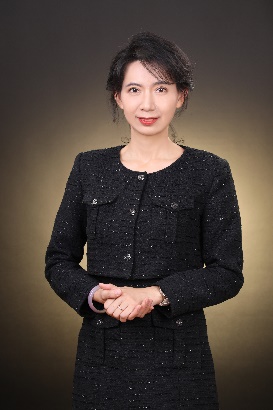
Professor Shan Liu,Communication University of China
Speech Title:
Research on Information Propagation Modeling and Control Guidance
Strategies in Complex Networks
Abstract:
With the development of internet technology and the popularization of smart
devices, media resources and the number of users are constantly increasing.
The rapid and frequent dissemination of public opinion information related to
emergencies, including false information, increasingly relies on media
resource networks and their integration with user social networks. How to
utilize the coupling relationship between media resource networks and user
social networks to quickly and efficiently disseminate positive information
and control the spread of harmful information has significant theoretical
value and practical significance. Our researches mainly focus on information
dissemination mechanisms, information dissemination models, information
dissemination thresholds, and public opinion guidance strategies on
multi-layer complex networks, etc. After years of continuous and in-depth
research, we have achieved many meaningful research results.
Bio of the Invited Speaker Shan Liu is Professor and Chair of the Department of Intelligent Science at the Communication University of China. She received her Ph.D. degree in Electrical Engineering from Texas A&M University, College Station, Texas, USA, in 2013. She is a committee member of the Chinese Association for Artificial Intelligence, the Chinese Institute of Electronics, the Beijing Society of Image and Graphics, the Association of Fundamental Computing Education in Chinese Universities, the China Automation Society, the National Alliance of Artificial Intelligence and Big Data Innovation Industry in Colleges and Universities, and the Institute of Electrical and Electronics Engineers. She has served as a peer reviewer for a series of IEEE Transactions and other high-level SCI journals. Her current research areas include complex networks, intelligent tags, big data, and artificial intelligence. Prof. Liu has been invited to the University of California, the National Laboratory of the United States, and other countries such as France and Belgium to give lectures and speeches and has gained broad academic influence. She has presided over more than 30 research projects, such as the National Natural Science Foundation of China, the National Social Science Foundation of China, and the National Key Research and Development Program of China, published more than 100 high-level academic papers, and received multiple best paper awards.
Bio of the Invited Speaker Shan Liu is Professor and Chair of the Department of Intelligent Science at the Communication University of China. She received her Ph.D. degree in Electrical Engineering from Texas A&M University, College Station, Texas, USA, in 2013. She is a committee member of the Chinese Association for Artificial Intelligence, the Chinese Institute of Electronics, the Beijing Society of Image and Graphics, the Association of Fundamental Computing Education in Chinese Universities, the China Automation Society, the National Alliance of Artificial Intelligence and Big Data Innovation Industry in Colleges and Universities, and the Institute of Electrical and Electronics Engineers. She has served as a peer reviewer for a series of IEEE Transactions and other high-level SCI journals. Her current research areas include complex networks, intelligent tags, big data, and artificial intelligence. Prof. Liu has been invited to the University of California, the National Laboratory of the United States, and other countries such as France and Belgium to give lectures and speeches and has gained broad academic influence. She has presided over more than 30 research projects, such as the National Natural Science Foundation of China, the National Social Science Foundation of China, and the National Key Research and Development Program of China, published more than 100 high-level academic papers, and received multiple best paper awards.
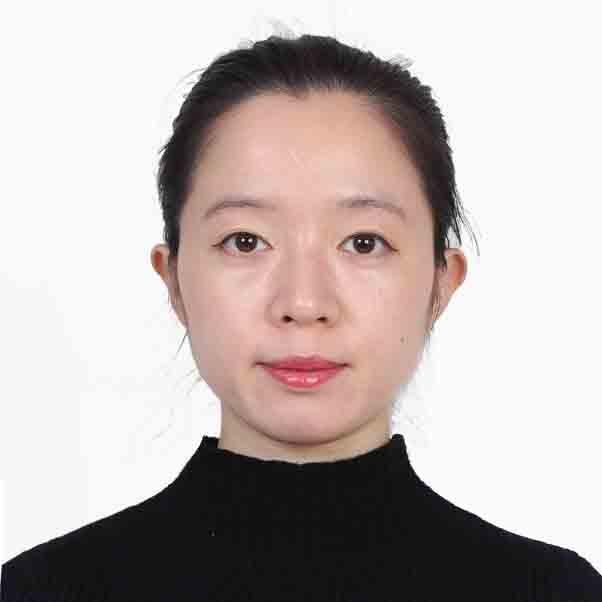
Professor LeSun, Nanjing University of Information Science and Technology
Speech Title:
Class-driven Graph Attention Network for Multi-label Time
Series Classification in Mobile Health
Abstract:
To reduce the complexity of developing an Mobile Health (mHealth) system,
methods must be implemented to classify mHealth data effectively and
identify the most influential data for predictive outcomes. mHealth data
typically manifests as multi-label time series, posing a formidable
challenge in accurate classification due to intricate interclass
relationships and the complexities of feature extraction. Graph neural
networks (GNN) present a promising avenue for capturing class relevance,
yet concurrently considering class relevance and temporal features for
learning class representations remains a challenging task. Addressing the
issue of over-smoothing in embedding learning is crucial in GNN-based
class representation. Our research introduces a pioneering architecture
termed Class-Driven Graph Attention Networks for multi-label time series
classification (C-DGAM). C-DGAM integrates a temporal attention module to
derive class representations and employs two function-independent graph
attention networks to discern varied relevance between classes.
Bio of the Invited Speaker Dr. Le Sun is a Professor in the School of Computer at Nanjing University of Information Science and Technology, China. She received her PhD degree from Victoria University, Australia in 2016, where she was awarded the Chancellor's citation for the Best PhD Award. In 2018, she was a visiting scholar at Michigan State University. Her primary research areas include XAI, energy-efficient smart healthcare, and data mining. Over the past few years, she has authored more than 50 papers published in prestigious journals and conferences, including IEEE JSAC, IEEE TNNLS, IEEE TCYB, IEEE TITS, IEEE TSC, Info.Sci., and others. Additionally, she has successfully led attended several projects funded by the National Natural Science Foundation of China. She actively contributes to the academic community by serving as a reviewer for many internationally recognized journals and conferences such as PAKDD, ICWS, HISS, and more. She has also been invited to serve as a guest editor and an editorial board member for several SCI journals and EI journals, including IEEE TCE, HISS, EAAI, and Springer Nature. Furthermore, she has applied for and been granted more than 10 Chinese patents. In recognition of her achievements, Dr. Sun has received entrepreneurial support from Shaoxing's "Hometown of Celebrities" Talent Program, as well as the 2022 Nanjing Overseas High-level Talent Double First prize in the competition.
Bio of the Invited Speaker Dr. Le Sun is a Professor in the School of Computer at Nanjing University of Information Science and Technology, China. She received her PhD degree from Victoria University, Australia in 2016, where she was awarded the Chancellor's citation for the Best PhD Award. In 2018, she was a visiting scholar at Michigan State University. Her primary research areas include XAI, energy-efficient smart healthcare, and data mining. Over the past few years, she has authored more than 50 papers published in prestigious journals and conferences, including IEEE JSAC, IEEE TNNLS, IEEE TCYB, IEEE TITS, IEEE TSC, Info.Sci., and others. Additionally, she has successfully led attended several projects funded by the National Natural Science Foundation of China. She actively contributes to the academic community by serving as a reviewer for many internationally recognized journals and conferences such as PAKDD, ICWS, HISS, and more. She has also been invited to serve as a guest editor and an editorial board member for several SCI journals and EI journals, including IEEE TCE, HISS, EAAI, and Springer Nature. Furthermore, she has applied for and been granted more than 10 Chinese patents. In recognition of her achievements, Dr. Sun has received entrepreneurial support from Shaoxing's "Hometown of Celebrities" Talent Program, as well as the 2022 Nanjing Overseas High-level Talent Double First prize in the competition.
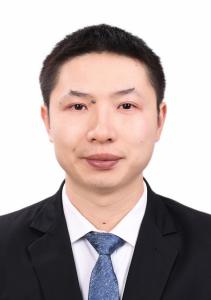
Associate Professor Tong-Xing Zheng,Xi’an Jiaotong University
Speech Title:
Reconfigurable Intelligent Surface Empowered Physical
Layer Security
Abstract:
6G wireless networks opens a new era of wireless communications from
connected things to connected intelligence. The open integration and
heterogeneous coexistence of 6G make network security an unprecedented
significant and challenging issue. Physical-layer security (PLS),
which achieves information secrecy by exploiting the intrinsic
characteristics of wireless channels, has been recognized as a
powerful approach for safeguarding wireless endogenous security for
6G. However, PLS is highly channel-dependent, which makes the
achievable security performance heavily restricted by the quality of
wireless channels. This talk will introduce a new PLS paradigm enabled
by reconfigurable intelligent surface (RIS). RIS is an emerging
metamaterial technology that can reconfigure electromagnetic signal
propagation path by adjusting the signal amplitude and phase in a
controllable manner, and has the potential to break through PLS
bottleneck from channel restricted to channel reconstructed. This
report will first introduce the background of PLS, after that the
RIS-PLS paradigm will be described accompanying with some of our
recent achievements, and finally several open issues will be discussed
particularly including how artificial intelligence (AI) can be
leveraged.
Bio of the Invited Speaker Tong-Xing Zheng received the B.S. degree in Information Engineering and Ph.D. degree in Information and Communications Engineering from Xi’an Jiaotong University, Xi’an, China, in 2010 and 2016, respectively. From 2017 to 2018, he was a Visiting Scholar with the School of Electrical Engineering and Telecommunications, University of New South Wales, Sydney, Australia. He is currently an Associate Professor with Xi’an Jiaotong University. His research interests include B5G/6G emerging wireless technologies, physical layer security, covert communications, reconfigurable intelligent surface, integrated sensing and communications. He has published the book Physical Layer Security in Random Cellular Networks (Springer, 2016), two book chapters, and over 100 papers in telecommunications journals and conference proceedings. He was a recipient of the Excellent Doctoral Dissertation Award of Shaanxi Province in 2019, the First Prize of Science and Technology Award in Higher Institution of Shaanxi Province in 2019 and 2023, the First Prize of Air Force First Aviation Creative Challenge in 2023, and the Best Paper Award at the 2023 International Conference on Ubiquitous Communication. He was honored as an Exemplary Reviewer of IEEE TRANSACTIONS ON COMMUNICATIONS in 2017, 2018, and 2021. He was a Leading Guest Editor of FRONTIERS IN COMMUNICATIONS AND NETWORKS in 2021 and a Guest Editor of WIRELESS COMMUNICATIONS AND MOBILE COMPUTING in 2018. He served as a Session Chair for the IEEE ICC 2022 and IoTCIT 2024. He has served as a TPC member for various IEEE sponsored conferences, including the IEEE GLOBECOM, ICC, WCNC, VTC, and PIMRC.
Bio of the Invited Speaker Tong-Xing Zheng received the B.S. degree in Information Engineering and Ph.D. degree in Information and Communications Engineering from Xi’an Jiaotong University, Xi’an, China, in 2010 and 2016, respectively. From 2017 to 2018, he was a Visiting Scholar with the School of Electrical Engineering and Telecommunications, University of New South Wales, Sydney, Australia. He is currently an Associate Professor with Xi’an Jiaotong University. His research interests include B5G/6G emerging wireless technologies, physical layer security, covert communications, reconfigurable intelligent surface, integrated sensing and communications. He has published the book Physical Layer Security in Random Cellular Networks (Springer, 2016), two book chapters, and over 100 papers in telecommunications journals and conference proceedings. He was a recipient of the Excellent Doctoral Dissertation Award of Shaanxi Province in 2019, the First Prize of Science and Technology Award in Higher Institution of Shaanxi Province in 2019 and 2023, the First Prize of Air Force First Aviation Creative Challenge in 2023, and the Best Paper Award at the 2023 International Conference on Ubiquitous Communication. He was honored as an Exemplary Reviewer of IEEE TRANSACTIONS ON COMMUNICATIONS in 2017, 2018, and 2021. He was a Leading Guest Editor of FRONTIERS IN COMMUNICATIONS AND NETWORKS in 2021 and a Guest Editor of WIRELESS COMMUNICATIONS AND MOBILE COMPUTING in 2018. He served as a Session Chair for the IEEE ICC 2022 and IoTCIT 2024. He has served as a TPC member for various IEEE sponsored conferences, including the IEEE GLOBECOM, ICC, WCNC, VTC, and PIMRC.
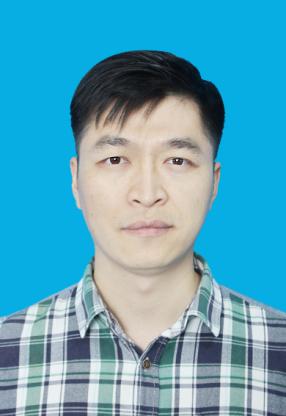
Professor.QiLiu, South China University of Technology
Speech Title:
Novel View Synthesis and 3D Reconstruction
Abstract:
There is a growing interest in novel view synthesis (NVS) and 3D
reconstruction technologies. NVS involves generating new
perspectives from existing viewpoints, whereas 3D reconstruction
entails creating 3D models of scenes using available views. These
technologies are widely used in driverless cars, modern urban
development, virtual reality experiences, and the digital
restoration of historical buildings. Our group primarily
concentrates on various key research areas: (1) Large-scale scene
NVS. We have created plug-and-play spatial partitioning and fusion
techniques that produce lifelike rendering results for aerial and
street scenes, all while greatly cutting down on memory usage. (2)
High-precision NVS. We suggested methods for adaptive
densification and view-dependent hash encoding to improve the
representation of scene lighting and textural details.
(3High-precision 3D reconstruction. Our approach simultaneously
generates realistic 3D models and novel views. (4) Efficient 3D
reconstruction from sparse views. With just 3-6 perspective
images, we can quickly create top-notch 3D reconstructions of
environments. We are also researching dynamic object
reconstruction, underwater scene reconstruction, and object
reconstruction using complex materials.
Bio of the Invited Speaker Qi Liu is currently a Professor with the School of Future Technology at South China University of Technology. Dr. Liu received a Ph.D degree in Electrical Engineering from City University of Hong Kong, Hong Kong, China, in 2019. During 2018 - 2019, he was a Visiting Scholar at the University of California Davis, CA, USA. From 2019 to 2022, he worked as a Research Fellow in the Department of Electrical and Computer Engineering, National University of Singapore, Singapore. His research interests include human-object interaction, AIGC, 3D scene reconstruction, and affective computing, etc. Dr. Liu has published over 50 papers in peer-reviewed journals and conferences, including IEEE TFS、TCYB、TCSVT、IoT-J、ACL、CVPR、AAAI, etc., and has been an Associate Editor of the IEEE Systems Journal (2022-), and Digital Signal Processing (2022-). He was also Guest Editor for the IEEE Transactions on Consumer Electronics, IEEE Internet of Things Journal, IET Signal Processing, etc. He was the recipient of the Best Paper Award of IEEE ICSIDP in 2019.
Bio of the Invited Speaker Qi Liu is currently a Professor with the School of Future Technology at South China University of Technology. Dr. Liu received a Ph.D degree in Electrical Engineering from City University of Hong Kong, Hong Kong, China, in 2019. During 2018 - 2019, he was a Visiting Scholar at the University of California Davis, CA, USA. From 2019 to 2022, he worked as a Research Fellow in the Department of Electrical and Computer Engineering, National University of Singapore, Singapore. His research interests include human-object interaction, AIGC, 3D scene reconstruction, and affective computing, etc. Dr. Liu has published over 50 papers in peer-reviewed journals and conferences, including IEEE TFS、TCYB、TCSVT、IoT-J、ACL、CVPR、AAAI, etc., and has been an Associate Editor of the IEEE Systems Journal (2022-), and Digital Signal Processing (2022-). He was also Guest Editor for the IEEE Transactions on Consumer Electronics, IEEE Internet of Things Journal, IET Signal Processing, etc. He was the recipient of the Best Paper Award of IEEE ICSIDP in 2019.